
The Lie of 'Data-Driven' - Decision First, Data Later
- Ravi

- Nov 21
- 2 min read
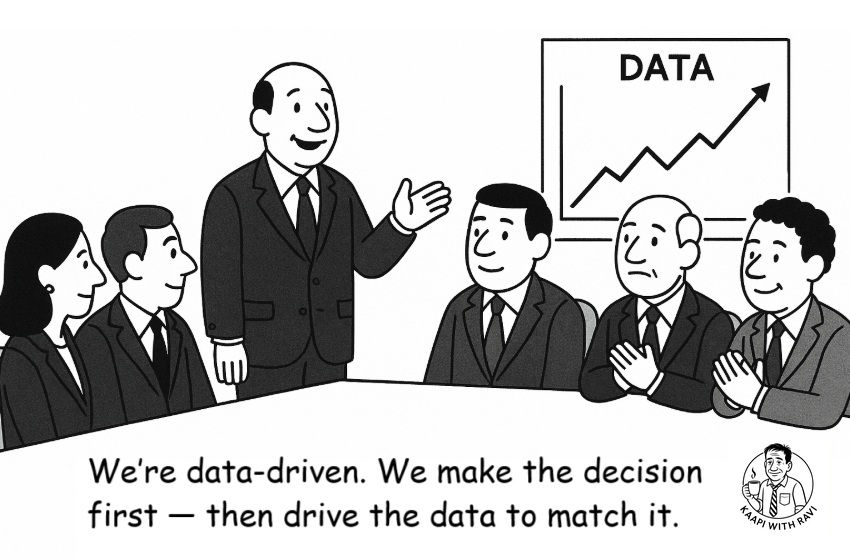
Have you ever sat in a meeting where a major decision was already made, and the entire data presentation felt like a theatrical performance? You're not alone.
The phrase "We're data-driven" has become the most misused corporate buzzword of the decade. While true data analysis is the engine of modern business, our latest cartoon by Kaapi with Ravi exposes the dark side: Data Manipulation driven by pure confirmation bias. This phenomenon is a serious threat to effective Leadership and ethical Culture.
Why Do We 'Drive' the Data?
The act of manipulating or selectively presenting data isn't always malicious; it's often rooted in deep-seated psychological and structural issues:
Confirmation Bias: The strongest driver. We naturally seek out information that confirms our pre-existing beliefs and ignore contradictory evidence. We explored this deeply in our section on how Leadership can avoid cognitive traps.
Fear of Being Wrong: Analysts and teams are often incentivized to deliver "good news." Challenging a senior leader's idea can be career-limiting, leading to a culture of compliance where data is "massaged." This toxic compliance is a common theme in our Culture cartoons.
Departmental Pressure: Often, the pressure to show success comes down to a specific team or Departmental unit needing to justify its budget or existence.
The Real-World Cost of Data Corruption
This type of behavior has tangible and long-term costs that destroy data integrity and negatively impact your Career trajectory if you are caught up in it.
Poor Strategy: Decisions based on flawed or fabricated data are almost always sub-optimal, leading to wasted resources and missed market opportunities.
Erosion of Trust: When employees realize the data is being faked for show, trust in leadership collapses — a major indicator of poor Culture.
Ethical Risk: At its extreme, manipulating data can become an ethical and legal issue. This is especially relevant as advanced tools and AI & Tech create new ways to visualize (and manipulate) information.
How to Foster True Data Integrity
To move from "driving the data" to truly "data-driven," companies need a cultural shift:
Separate Analysis from Advocacy: The people who analyze the data should not be the same people advocating for a specific outcome. This requires strong ethical Leadership.
Establish Data Governance: Implement clear, transparent rules for data collection, cleaning, and reporting. All stakeholders should agree on the metrics before the results come in.
Reward Good Questions: Leadership must actively reward analysts who bring forward data that contradicts the prevailing belief. Making it safe to challenge assumptions is the foundation of a healthy Culture.
The next time you hear someone proudly declare they are "data-driven," pause and consider the satirical truth of our cartoon.
Are they genuinely letting the facts lead, or are they driving the facts to lead where they want to go?
The choice often defines the health of an organization’s Career landscape.
What do you think? Share your own stories of data being "driven" in the comments below!


Comments